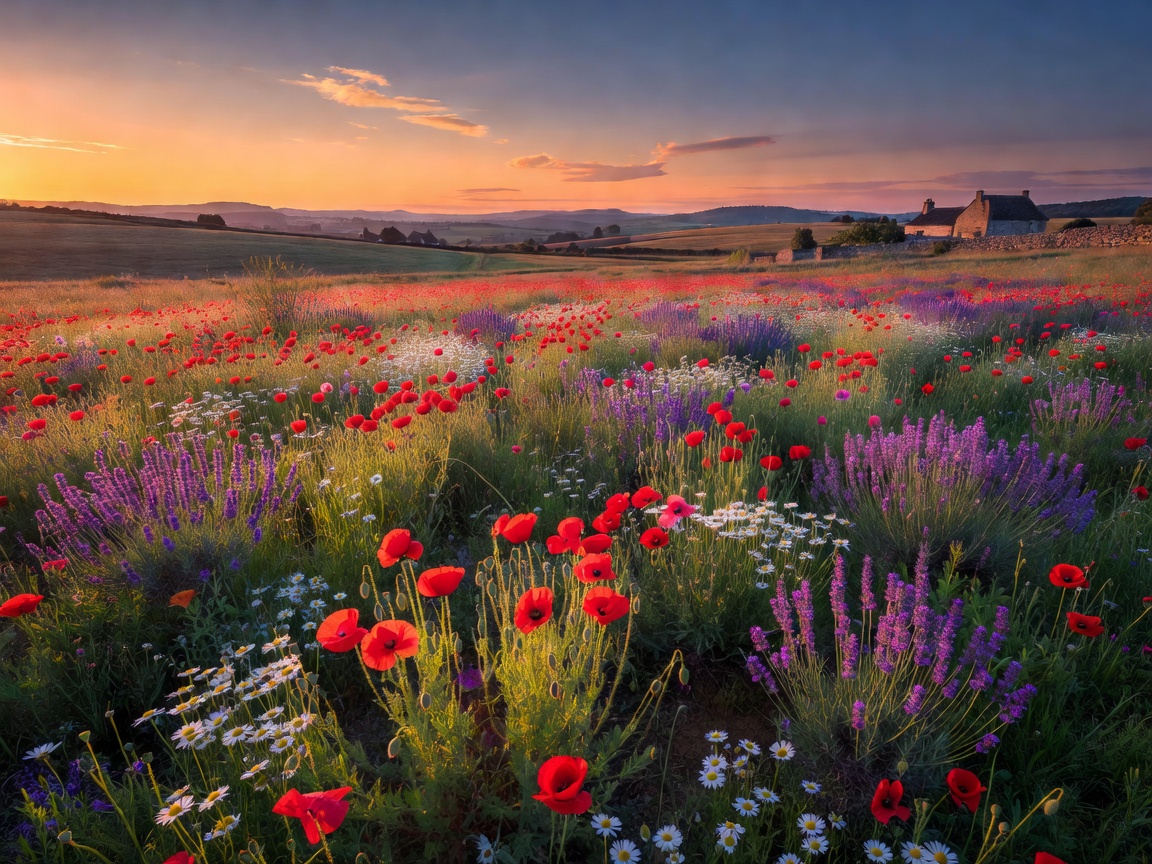
Flowering is a moving system. Latitude, altitude, rainfall, temperature, habitat and exposure all shift the sequence. A warm south-facing slope may open before a shaded valley. A cold spring may delay a lowland display while a dry spell shortens it.
Early spring
Woodland floors and sheltered lowlands often respond first. Light reaches the ground before leaf canopy closes. Wet ground, frost and short daylight remain possible. River margins and coastal sites can behave differently from inland slopes. Choose routes with a firm return option.
Late spring
Meadows, hedgerows and lower mountain slopes usually become more active as temperatures rise. Management matters. Mowing, grazing and soil fertility influence which plants appear and how long they remain visible. Treat “peak” as a regional tendency, not a fixed date.
Early summer
Higher meadows and cooler northern landscapes may enter their strongest period. Elevation creates a useful calendar shift: flowering generally occurs later as the ground rises, although aspect and snowmelt can override that pattern. Rainfall controls both abundance and route conditions.
Peak summer
Mountain pastures, northern coasts and some wet habitats may still be productive. Mediterranean lowlands can be dry and sun-exposed by this stage. Early walking reduces heat exposure, but access and transport schedules still need checking. Carry water and protect fragile ground.
Late summer
Late flowers often persist in uplands, damp ground, woodland edges and cooler maritime areas. Wind, drought and repeated rain alter the visual character quickly. Do not plan around a single named species unless local information is current and specific.
Early autumn
Flowering becomes more selective. Meadow margins, late grassland plants and sheltered coastal or woodland sites can retain colour. Shorter daylight and wet surfaces affect route choice. Consider a shorter loop with a clear exit.
Use the calendar as a first filter. Then compare the chosen habitat, altitude, exposure and recent weather. Exact local dates require current local sources. Plan for variation, not certainty, and avoid picking plants or entering closed areas.